Packing for summer camp is a little different from packing for a trip or school. You usually want tech that is durable, simple, helpful in a shared environment, and not so expensive that you will worry about losing it. The best gear supports camp life without becoming a distraction.
This guide covers the most practical tech essentials to bring to summer camp, plus a few items that are useful depending on the camp rules, your activities, and how much time you will spend away from outlets.
Start With the Basics: What Camp Tech Should Actually Do
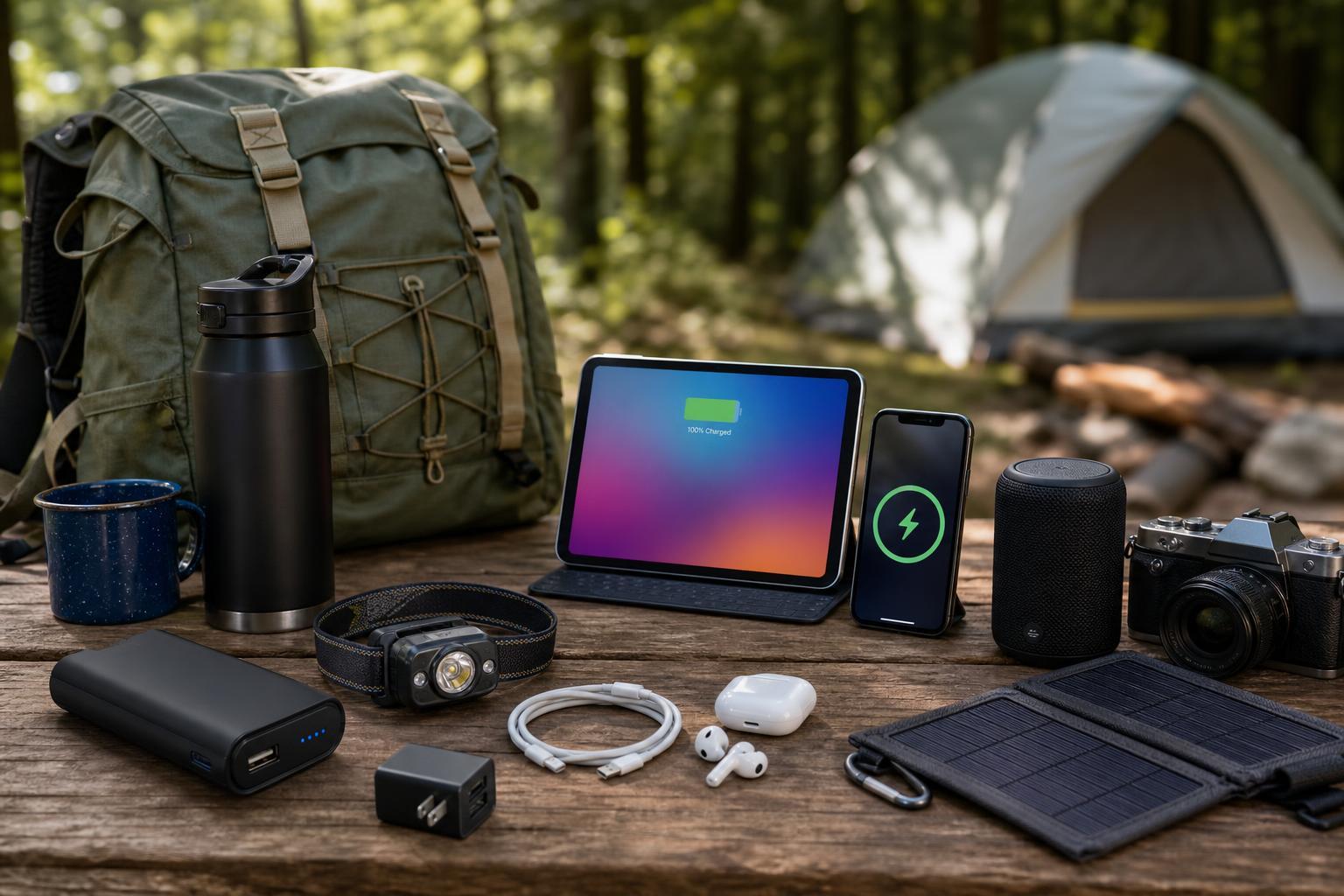
At camp, tech is usually most useful when it solves one of a few problems: keeping a device charged, helping you see in the dark, protecting your stuff, storing photos or files, or giving you a way to listen privately without bothering others.
- Stay charged when outlets are limited
- Survive heat, dust, drops, and packed bags
- Take up little space in a locker or duffel bag
- Work without needing much setup
- Fit camp rules about electronics and internet access
1. A Reliable Portable Charger
A portable charger is one of the most useful things you can bring to camp, especially if you are allowed to keep a phone, smartwatch, or small device with you. A good power bank helps when outlet access is limited or when you do not want to leave a device charging in a shared cabin.
- Choose a size that fits camp rules and your needs
- Look for at least one USB-A or USB-C output that matches your cable
- Pick a model that is easy to carry and clearly labeled
- Bring the right charging cable along with it
2. Short, Durable Charging Cables
A spare charging cable is easy to overlook, but it can save the day if your main cable breaks or gets left at home. For camp, short cables are usually more practical than long ones because they are easier to pack and less likely to get tangled.
- Bring at least one backup cable for your main device
- Choose braided or reinforced cables if you want extra durability
- Avoid very cheap cables that fray easily
- Keep cables coiled neatly so they do not tangle in your bag
3. A Small Flashlight or Headlamp
A flashlight is more useful at camp than many people expect. It helps with late-night bathroom trips, finding items in a tent or cabin, and moving around without turning on bright lights that may disturb other campers.
- A headlamp keeps both hands free
- A compact flashlight is easier to toss in a pocket
- LED models usually last longer and run cooler
- Check whether the batteries are rechargeable or replaceable
4. Headphones for Private Listening
If camp rules allow music, podcasts, audiobooks, or movies, headphones are a lot better than speakers in shared spaces. They let you listen privately without disturbing bunkmates or neighboring tents.
- Wired headphones do not need charging
- Wireless earbuds are convenient but require battery management
- Over-ear headphones can be more comfortable for long use
- A simple case helps prevent them from getting crushed in a bag
5. A Rugged Phone Case and Screen Protection
Camp is not a great place for fragile gear. A sturdy phone case and screen protector can prevent damage from drops, dust, and rough bag handling. Even if you do not plan to use your phone often, protection matters because you may need it in an emergency or for pickup coordination.
- Choose a case with raised edges for extra protection
- Use a screen protector if your phone will be in pockets or backpacks
- Make sure the case still fits your charger and buttons properly
- Consider a wrist strap or lanyard only if it is allowed and useful for your activities
6. A Small Storage Drive or Memory Card
If you will be taking photos, videos, or carrying school files, a USB flash drive or memory card can be a smart addition. It is also useful if you need to move files between devices without relying on internet access.
- Use a drive with a cap or a built-in connector cover
- Keep it in a pouch or case so it does not get lost
- Label it if several people are packing similar gear
- Do not store the only copy of important files on one drive
7. A Compact Battery Light or Clip-On Lamp
A clip-on light can be handy if you need to read, pack, or sort your stuff after lights-out. It is more targeted than a room light and usually less disruptive in shared sleeping areas.
- Look for a clamp or clip that grips fabric or a shelf
- Pick a model with adjustable brightness
- Battery-powered or rechargeable versions both work well
- Make sure it is small enough to pack easily
8. Basic Earbuds or a Small Speaker Only If Allowed
A small speaker may sound useful, but it is often less appropriate at camp unless the rules clearly allow it. In many cases, earbuds are the better choice because they avoid noise conflicts.
- Use a speaker only if camp rules and cabin mates are okay with it
- Choose a speaker that is easy to mute quickly
- Keep volume reasonable in shared spaces
- Earbuds are usually the more camp-friendly option
9. A Water-Resistant Bag or Tech Pouch
A simple pouch can protect charging gear, earbuds, flash drives, and cables from dirt and moisture. It also makes it easier to find small items instead of digging through a whole backpack.
- Choose a zippered pouch with enough room for cables and adapters
- Look for water-resistant material if weather could be an issue
- Keep small items together so they do not get lost in your main bag
- Use separate pouches for clean tech and dirty gear if needed
10. Optional Extras That Can Be Worth It
Depending on the camp, a few additional items may be worth packing. These are not essential for everyone, but they can make life easier in the right situation.
- A smartwatch for steps, alarms, or quick time checks if allowed
- A simple alarm clock if your phone will stay packed away
- A charging brick with multiple ports if you are responsible for several devices
- A label maker or adhesive labels for keeping gear organized
- A small fan if the camp allows personal cooling devices and outlets are available
What Not to Pack Unless You Really Need It
It is easy to overpack tech for camp. In many cases, expensive or fragile items are more stress than help.
- A gaming console, unless the camp specifically allows and supports it
- Large monitors or laptops that will mostly stay unused
- Speakers that are too big for a bunk or cabin
- Too many charging bricks and cables you will not actually use
- Anything valuable that you cannot keep secure
How to Pack Camp Tech So It Survives the Trip
Even good gear can fail if it is packed poorly. A little organization goes a long way when your stuff is moving between a car, a bus, a cabin, and outdoor activities.
- Group cables, chargers, and small accessories into one pouch.
- Keep delicate items padded so they do not get crushed.
- Label anything that looks similar to other campers' gear.
- Charge devices fully before departure.
- Pack items you may need quickly, like a flashlight or power bank, where they are easy to reach.
Choosing the Right Tech for Your Camp Style
The best tech setup depends on what kind of camp you are attending. A sleepaway camp with cabins has different needs than a day camp or a camp with travel time, sports, or outdoor hikes.
- Sleepaway camp: power bank, flashlight, durable case, and a pouch for small items
- Day camp: portable charger, headphones, and a compact bag for daily use
- Outdoor camp: headlamp, rugged case, water-resistant pouch, and minimal tech overall
- Camp with schoolwork or media: storage drive, charger, and a reliable cable
A Simple Camp Tech Packing List
If you want a quick checklist, start with the items below and add only what fits your camp’s rules and your own routine.
- Portable charger
- Charging cable and backup cable
- Flashlight or headlamp
- Headphones or earbuds
- Phone case and screen protector
- Small tech pouch
- USB drive or memory card if needed
- Optional clip-on light or small alarm clock
What to Remember Before You Leave
The best summer camp tech is practical, durable, and easy to manage. Focus on items that help you stay organized, charged, and prepared without bringing more gear than you need. A few well-chosen essentials will usually serve you better than a bag full of gadgets.